Should You Turn Your Second Home Into a Short-Term Rental?
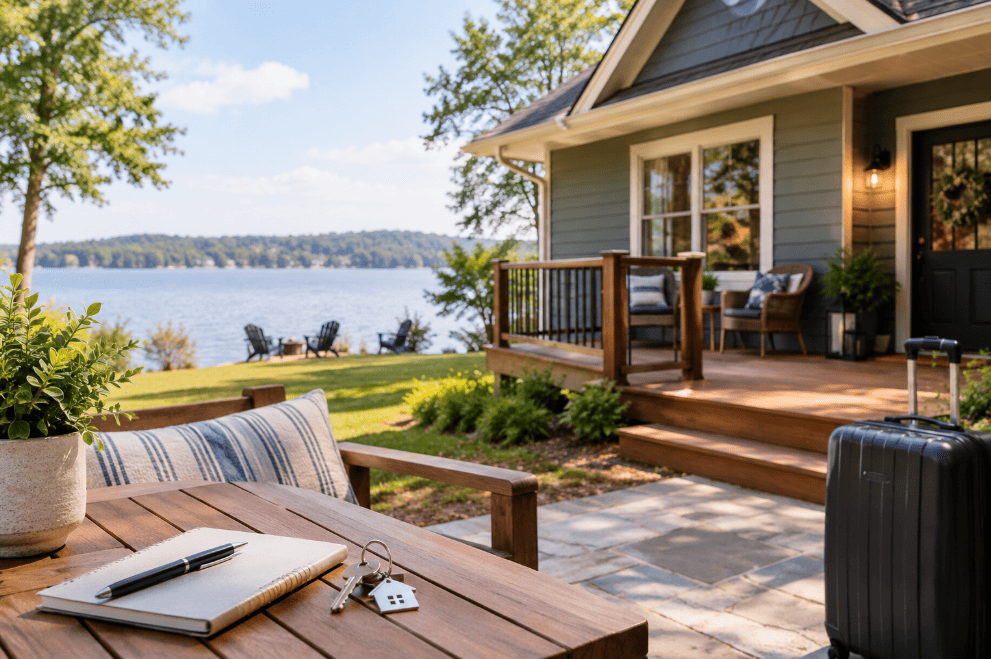
A second home can be more than a place you visit a few times each year. If the property sits unused for substantial periods, you may be wondering whether you should turn your second home into a short-term rental and generate income when you are not using it.
The answer depends on much more than whether guests are willing to book the property.
You need to consider the property’s location, guest demand, potential revenue, operating expenses, local regulations, furnishing requirements, maintenance, cleaning, guest communication, and how much time you want to spend managing the property.
For some owners, short-term rental management can turn an underused property into an actively managed income-producing asset. For others, the costs, restrictions, or workload may make short-term renting less attractive.
The first step is to determine whether the property actually fits the short-term rental model.
Can You Turn a Second Home Into a Short-Term Rental?
In many markets, a second home can be operated as a short-term rental if the property and its use meet applicable local requirements.
However, owning the property does not automatically mean you can list it for short stays. Before advertising a second home, check:
- Local zoning requirements
- Short-term rental licensing or permitting
- Occupancy limits
- Parking requirements
- Safety requirements
- HOA or subdivision restrictions
- Local tax requirements
- Insurance requirements
- Any applicable state or county regulations
Rules vary by location. In unincorporated St. Charles County, a 2026 ordinance requires a license for eligible short-term rentals and includes requirements for inspections, occupancy, local contacts, and operating standards.
The City of St. Charles has separate STR regulations. The city currently limits residential STRs to the Extended Historic Preservation District and has reached its stated residential STR cap, so new applications for those properties are not currently being accepted.
If you’re considering turning a second home into a short-term rental in the St. Charles area, verify the property’s exact jurisdiction and current requirements before listing it.
What Makes a Second Home a Good Short-Term Rental?
Not every second home is a strong candidate for short-term rental use.
A property may be more suitable when it has several characteristics that align with guest demand and practical operations.
Location
Location is one of the first things to evaluate.
Guests generally choose short-term rentals based partly on what they want to do in the area and how convenient the property is to those destinations. Depending on the market, demand may come from:
- Leisure travelers
- Families
- Business travelers
- Event attendees
- People visiting friends or relatives
- Guests attending weddings or other gatherings
- Extended-stay visitors
- Travelers needing temporary accommodations
A property does not necessarily need to be in a traditional vacation destination to work as a short-term rental. The important question is whether there is a consistent reason for guests to stay in that particular area.
Property Layout
The layout can also affect the property's appeal.
Consider:
- Number of bedrooms
- Number of bathrooms
- Sleeping arrangements
- Living space
- Kitchen functionality
- Parking
- Outdoor space
- Privacy
- Accessibility
- Storage
A home that comfortably accommodates several guests may have a different revenue opportunity from a small property designed for one or two people.
The property's physical characteristics should match the guests you expect to attract.
Guest Experience Potential
A second home may have features that make it naturally appealing to short-term guests. These could include:
- A desirable neighborhood
- A spacious kitchen
- Comfortable bedrooms
- Outdoor living space
- A convenient location
- Attractive views
- A pool or other recreational feature
- Workspace
- Easy parking
- Family-friendly layout
The goal is not to add every possible amenity. Instead, determine which existing characteristics give the property a reason for guests to choose it.
How Much Could Your Second Home Earn as a Short-Term Rental?
This is one of the most important questions, but it is also one of the easiest to answer incorrectly.
There is no universal income number for a second home. Potential revenue can vary based on:
- Location
- Property size
- Bedroom count
- Guest capacity
- Seasonality
- Local events
- Property condition
- Amenities
- Listing quality
- Reviews
- Competition
- Pricing strategy
- Availability
- Management quality
A nearby property may generate very different results even if it has a similar purchase price.
That is why owners should avoid using another property's gross booking revenue as a direct prediction for their own home.
Start With a Property-Specific Revenue Estimate
A better approach is to evaluate the specific property.
Consider:
What could the property realistically charge?
Look at comparable short-term rentals rather than assuming a premium nightly rate.
How often could it realistically be booked?
A high nightly rate does not necessarily produce strong annual revenue if occupancy is weak.
What expenses will reduce gross revenue?
Revenue is only the starting point.
A realistic evaluation should account for cleaning, maintenance, utilities, supplies, platform costs, insurance, taxes, management, replacement costs, and other operating expenses.
How much personal use do you want?
This is especially important for second-home owners.
If you plan to use the property for several weeks or months during peak demand periods, those dates may reduce the number of nights available for guests. That does not necessarily make the property a bad short-term rental. It simply needs to be part of the financial calculation.
Don't Confuse Gross Revenue With Profit
A second home that produces $50,000 in annual booking revenue does not necessarily generate $50,000 in income for the owner.
Operating expenses can include:
- Cleaning and turnover
- Utilities
- Internet
- Property maintenance
- Landscaping
- Pool or hot tub service
- Repairs
- Furniture replacement
- Linens and supplies
- Insurance
- Taxes
- Booking platform fees
- Management fees
- Licensing or permit costs
- Periods without bookings
Some costs will occur regularly, while others will appear unexpectedly. This is why a second-home STR analysis should look beyond projected revenue.
The more useful question is:
What could the property reasonably produce after its operating costs and required management expenses?
How Much Work Is It to Run a Second Home as a Short-Term Rental?
This is where many second-home owners underestimate the commitment. Short-term rental management involves much more than publishing a listing and waiting for bookings.
Between reservations, someone needs to manage:
- Guest inquiries
- Booking questions
- Check-in instructions
- Check-out information
- Cleaning
- Linen turnover
- Restocking
- Maintenance
- Repairs
- Property inspections
- Guest issues
- Scheduling vendors
- Calendar management
- Pricing
- Listing updates
- Reviews
- Emergency situations
And those responsibilities do not necessarily occur during convenient business hours.
A guest may have a problem with the property late at night. A cleaner may report damage shortly before another guest is scheduled to arrive. An appliance may stop working during a weekend stay.
The owner needs a plan for handling these situations.
Can You Manage a Second Home Yourself?
Yes, some owners choose to self-manage their short-term rentals.
Self-management can give an owner direct control over guest communication, pricing, vendors, and the overall operation. But it also means taking responsibility for the work.
Before choosing self-management, ask yourself:
- Do I live close enough to respond when necessary?
- Can I handle guest messages throughout the week?
- Who handles emergencies?
- Who cleans between stays?
- Who checks the property?
- Who handles maintenance?
- Who restocks supplies?
- Who manages pricing and availability?
- What happens when I am traveling?
- What happens if I become unavailable?
If the property is far from your primary residence, the logistics can become more complicated.
When Does Professional Short-Term Rental Management Make Sense?
Professional management can be particularly useful when an owner wants the property to operate as a short-term rental without personally handling every operational responsibility.
This can be especially relevant for second-home owners who:
- Live in another city or state
- Travel frequently
- Own multiple properties
- Do not want to handle guest communication
- Do not have reliable local vendors
- Do not want to coordinate cleaning
- Prefer not to respond to after-hours problems
- Want a more structured operating process
Professional management does not eliminate the costs of operating a rental. Instead, it transfers many day-to-day responsibilities to a management team.
The important question is whether the time, convenience, operational consistency, and local support justify the management expense for your particular property.
How to Prepare a Second Home for Short-Term Rental Guests
A second home that was furnished for personal use may need changes before it becomes a guest-ready rental.
Review the Furniture
Furniture should be comfortable, attractive, appropriately sized, and durable enough for repeated guest use.
Upgrade Sleeping Areas
Mattresses, pillows, bedding, blackout curtains, nightstands, and adequate lighting can all affect the sleeping experience.
Make the Kitchen Functional
Guests may want to prepare breakfast, store leftovers, make coffee, or cook meals.
Improve Storage
Guests need somewhere to place clothing, luggage, and personal items.
Check the Internet
Reliable Wi-Fi is increasingly important for both leisure and business travelers.
Make Safety a Priority
Smoke alarms, carbon monoxide detection where required, appropriate fire safety equipment, secure access, and other safety measures should be reviewed as part of preparing the property.
Remove Personal Belongings
A personal second home may contain photographs, valuables, paperwork, collections, or other items that should not remain accessible to guests.
The goal is to create a property that feels welcoming without making guests feel as though they are staying in someone else's personal home.
What About Using the Home Yourself?
One of the biggest advantages of a second home is that you can potentially continue using it while making it available to guests at other times.
But personal use needs to be planned carefully. You may want the property during:
- Holidays
- School breaks
- Summer
- Weekends
- Special events
- Personal vacations
Some of those periods may also be among the property's strongest potential booking periods.
That creates an important tradeoff. Before converting the property, decide how much personal use matters to you and whether you are comfortable giving up some booking opportunities.
What If the Property Is in an HOA or Planned Community?
This deserves attention before you move forward.
Even if local regulations allow short-term rentals, an HOA, condominium association, subdivision, or other governing organization may impose additional restrictions.
Review the applicable governing documents for provisions involving:
- Rental minimums
- Short-term occupancy
- Guest limits
- Parking
- Noise
- Exterior amenities
- Leasing restrictions
- Registration requirements
Do not assume that because another nearby property operates as a short-term rental, your property is automatically permitted to do the same.
What Should You Know About St. Charles, MO Short-Term Rentals?
If your second home is in the St. Charles area, local rules should be part of your initial due diligence. The City of St. Charles currently has specific STR requirements, including an annual short-term rental permit, safety inspection, parking requirements, noise restrictions, and a mandatory noise monitoring device. Residential STRs are currently limited to the Extended The City of St. Charles has specific short-term rental rules, including location restrictions and a residential STR cap. The city currently states that its residential cap has been reached and new residential applications are not being accepted.
Unincorporated St. Charles County has separate STR regulations, including licensing, inspections, occupancy, local contact, and operating requirements. Because requirements vary by jurisdiction, owners should verify the property’s exact location and current rules before listing it.
Should You Furnish Your Second Home Differently for Short-Term Guests?
Usually, yes.
A personal residence can contain furniture and belongings selected primarily around the owner's preferences.
A short-term rental needs to accommodate people who have never stayed in the property before. That means furnishing should prioritize:
- Comfort
- Durability
- Easy cleaning
- Adequate storage
- Practical layouts
- Attractive listing photos
- Guest capacity
- Consistent design
A property does not need to be filled with expensive furniture. In many cases, thoughtful, durable furnishings that fit the space are more practical than high-end pieces that are difficult to maintain.
What Are the Biggest Mistakes Second-Home Owners Make?
Assuming Revenue Is Guaranteed
A short-term rental's income can change based on demand, competition, seasonality, pricing, availability, and other factors.
Ignoring Operating Costs
Gross booking revenue does not tell you what the owner will actually keep.
Treating It Like a Traditional Rental
Short-term rentals require more frequent guest turnover and more active operational management.
Underestimating Maintenance
Frequent guest use can create additional wear on furniture, appliances, fixtures, and other parts of the property.
Ignoring Local Rules
A property must be eligible for short-term rental use before an owner invests heavily in setup.
Pricing Based on Guesswork
Nightly rates should reflect the market, property characteristics, demand, seasonality, and competition.
Leaving the Property Unmanaged From a Distance
A second home may be hundreds of miles away from its owner. When something goes wrong, distance becomes an operational issue.
Focusing Only on Revenue
The goal is not simply to produce bookings. The property needs an operating model that makes sense after expenses and management.
A Simple Second-Home Short-Term Rental Evaluation
Before converting your property, work through these questions:
1. Is the property legally eligible?
Confirm local zoning, licensing, permitting, HOA, and other applicable requirements.
2. Is there enough guest demand?
Look at comparable properties and the reasons travelers visit the area.
3. What type of guest would book it?
Define the property's likely audience instead of trying to appeal to everyone.
4. What could the property realistically earn?
Use comparable properties and market conditions rather than an optimistic revenue assumption.
5. What will it cost to operate?
Account for utilities, cleaning, maintenance, supplies, insurance, taxes, platform costs, management, and other expenses.
6. How much personal use do you want?
Block the dates you expect to use and understand how that affects potential revenue.
7. Who will manage the property?
Decide whether you will handle guest communication, turnovers, maintenance, and emergencies yourself or hire a professional management company.
8. Does the property still make sense after those factors?
That is the question that matters most.
Is Turning a Second Home Into a Short-Term Rental Worth It?
There is no universal answer.
For an owner with a well-located property, sufficient guest demand, manageable operating costs, and a practical management plan, short-term rental use may provide a way to put an underused property to work.
For another owner, local restrictions, weak demand, high operating costs, personal-use priorities, or the time required to manage the property may make a different strategy more appropriate.
The right decision starts with the property rather than a generic revenue estimate.
If you are considering converting your second home, evaluate the property as an operating business before spending money on furnishings, photography, or marketing.
What TurnKey Stays Can Handle for Your Second Home
Turning a second home into a short-term rental does not have to mean becoming a full-time host.
TurnKey Stays provides full-service short-term rental management, handling the operational responsibilities that come with hosting guests.
Depending on the property and management arrangement, that can include the work involved in:
- Preparing the property
- Managing the listing
- Coordinating guest stays
- Communicating with guests
- Managing turnovers
- Handling cleaning
- Coordinating maintenance
- Responding to guest issues
- Monitoring the property’s condition
- Managing the ongoing guest experience
The benefit for a second-home owner is not simply having someone answer messages. It is having a local operating system in place for the property while the owner remains focused on ownership.
That can be particularly valuable when the property is located away from your primary residence.
Frequently Asked Questions About Turning a Second Home Into a Short-Term Rental
Can I turn my second home into a short-term rental?
Potentially. Whether you can do so depends on local zoning, licensing, permits, HOA or community restrictions, property requirements, and other applicable rules. Verify the property’s eligibility before listing it.
Is a second home a good short-term rental investment?
It depends on the individual property. Location, guest demand, potential revenue, operating expenses, property condition, regulations, personal use, and management costs all affect the opportunity.
Can I still use my second home if I make it a short-term rental?
Yes, where permitted, owners can generally block dates for personal use. However, personal use during high-demand periods can reduce the number of nights available for guests and should be included in the financial evaluation.
How much can a second home make as a short-term rental?
There is no reliable universal amount. Revenue depends on the property’s location, size, guest capacity, amenities, demand, seasonality, pricing, competition, availability, and management.
What expenses should I consider before converting my second home?
Consider cleaning, utilities, internet, maintenance, repairs, supplies, furnishings, insurance, taxes, platform fees, permits or licensing, management, landscaping, and replacement costs. The specific expenses will vary by property.
Do I need a permit to operate a short-term rental?
Requirements depend on the property’s jurisdiction. For example, St. Charles County’s 2026 ordinance requires a license for qualifying STRs in unincorporated areas, while the City of St. Charles has its own permit and zoning requirements.
Can TurnKey Stays manage a second home as a short-term rental?
TurnKey Stays provides full-service short-term rental management for property owners who want professional help handling the ongoing responsibilities of operating a short-term rental. Owners can start by requesting a pro forma to discuss their property’s potential.
Ready to Explore Your Second Home's Short-Term Rental Potential?
Your second home may have more potential than simply being a property you visit occasionally. But before turning it into a short-term rental, you need to know whether the location, property, market, regulations, expenses, and management requirements support the decision.
TurnKey Stays can help you evaluate the opportunity and understand what professional short-term rental management could look like for your property.
Request Your Pro Forma to start the conversation.